South Woodford’s Hidden Gem Streets | Local E18 Property Guide
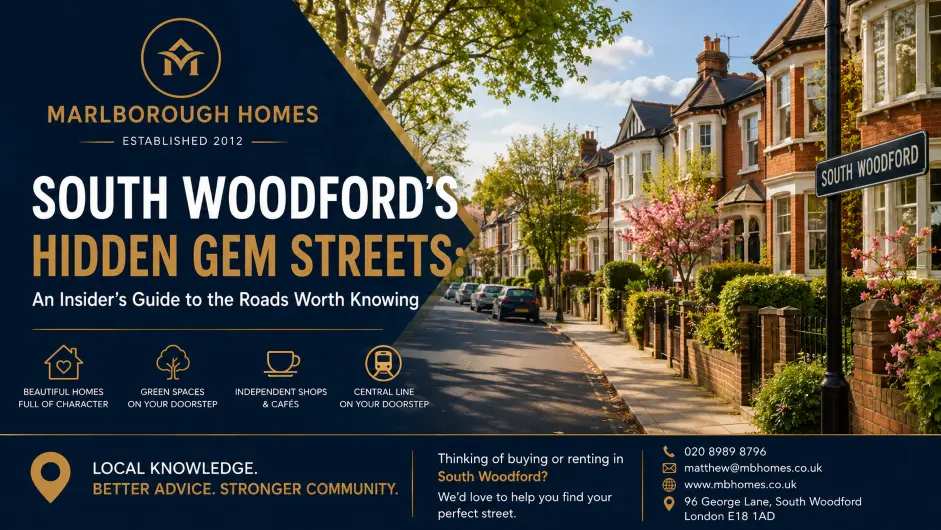
South Woodford's Hidden Gem Streets: An Insider's Guide to the Roads Worth Knowing Everyone knows about South Woodford. The Central line stop, the independent cafés along George Lane, the kind of tree-lined streets that make people stop mid-scroll and think, "actually, yes — that's where I want to live." But here's the thing: the roads that tend to grab the headlines — or the most clicks on Rightmove — are rarely the whole story. South Woodford is a neighbourhood with real depth. And if you know where to look, there are pockets of it that offer extraordinary value, genuine character, and a sense of community that you simply can't manufacture. At Marlborough Homes, we've spent years getting to know this area street by street. This is our honest, insider guide to the parts of South Woodford that savvy buyers and renters often overlook — and really shouldn't.
Why "Hidden Gem" Streets Matter More Than You Might Think
When people start searching for a home in South Woodford, they often anchor themselves to a handful of well-known roads — the ones that come up repeatedly in conversations, the ones their friends mention, the ones that appear at the top of every search. That's completely understandable. But it can mean missing out.
The lesser-known streets of any neighbourhood tend to share a few common traits:
Better value per square foot — less competition means more home for your money
Stronger community feel — quieter roads often have a tighter-knit, neighbourly atmosphere
Untapped potential — properties that haven't been through multiple rounds of cosmetic upgrades often have more scope for personalisation
Genuine character — the kind of architectural detail and garden space that gets squeezed out of more intensively developed areas
South Woodford has all of this in abundance, if you know where to look.
The Streets That Deserve a Second Look
The Quiet Roads Off Woodford Avenue
Woodford Avenue itself is well-regarded — and rightly so. But the residential streets that branch off it, particularly heading towards the Roding Valley, are frequently underestimated. These roads offer a noticeably different pace of life: wider plots, more mature planting, and a genuine sense of space that feels almost surprising given how close you are to the tube.
Families in particular tend to fall for this part of South Woodford. The proximity to open green space, combined with easy access to the Central line at South Woodford station, makes it a genuinely practical choice — not just an aesthetic one. And because these streets don't carry the same name recognition as some of the more prominent roads, the pricing can reflect that.
Insider tip: If you're viewing properties in this area, pay attention to the plot sizes. Gardens here can be considerably more generous than you'd expect, and that space has real long-term value — both for lifestyle and for future planning permissions.
The George Lane Hinterland
George Lane is South Woodford's social spine — the independent shops, the restaurants, the Saturday morning energy of it all. But the streets that sit just behind it, away from the main drag, are often overlooked in favour of the more prominent addresses closer to the station.
What you find when you explore these roads is something rather lovely: the convenience of being moments from everything George Lane has to offer, without the noise or footfall of living directly on a high street. It's the best of both worlds — the buzz is right there when you want it, and completely absent when you don't.
These streets also tend to attract a really interesting mix of residents: young professionals, established families, and long-term locals who've quietly known the value of this spot for years. That mix creates a community feel that's hard to replicate in more homogeneous areas.
The Eastern Edges Towards Snaresbrook
The boundary between South Woodford and Snaresbrook is one of those pleasantly blurry lines that benefits buyers who are willing to explore it. Properties on the South Woodford side of this area — particularly those within comfortable walking distance of Snaresbrook station as a secondary option — offer genuine flexibility.
You're looking at streets with real architectural variety here: Victorian and Edwardian terraces sitting alongside inter-war semis, the occasional detached property, and some genuinely handsome period conversions. It's the kind of area where two houses on the same road can feel quite different from one another, which makes it particularly interesting for buyers who want something with individual character rather than uniformity.
The green spaces in this part of the area are also worth mentioning. Eagle Pond and the surrounding Snaresbrook environs are genuinely beautiful, and they're far less crowded than you might expect given how central the location is.
Worth knowing: Renters often discover this part of South Woodford through word of mouth rather than property portals — which means availability can be limited. If you're renting and this area appeals, speaking to a local agent early gives you a real advantage.
The Residential Roads Near Highams Park Border
Towards the northern edges of South Woodford, where the postcode starts to nudge towards Highams Park, there's another cluster of streets that consistently surprises people who take the time to explore them. The housing stock here tends to be more spacious — larger semis and detached homes that would command a significant premium if they were half a mile closer to the station.
What makes these streets work is the combination of space and connectivity. You're still within a reasonable walk or cycle of South Woodford station, and the local amenities — schools, parks, everyday essentials — are all well within reach. For growing families who need room to breathe but can't stretch to the most sought-after postcodes, this part of the area is genuinely worth serious consideration.
The schools in and around this area are another draw. South Woodford and its surrounding neighbourhoods have a strong educational offering, and these streets sit within catchment areas that families relocating to London often find very appealing once they do their research.
What Makes South Woodford Work — Beyond the Obvious
It would be easy to write about South Woodford purely in terms of its Central line access and its George Lane café culture. Both are real and both matter. But the reason people stay in South Woodford — and the reason so many people who grew up here find themselves returning — goes a bit deeper than that.
There's a genuine sense of community here. Local events, independent businesses that have been trading for decades, neighbours who actually know each other's names. That's increasingly rare in London, and it's something that the lesser-known streets of South Woodford tend to preserve particularly well.
The green space is also significant. Between Epping Forest to the north, the Roding Valley to the west, and the various parks and open areas scattered throughout the neighbourhood, South Woodford offers a relationship with nature that most parts of Zone 4 simply can't match. For families with children, for dog owners, for anyone who needs to decompress after a week in the city — it matters enormously.
How to Find These Streets for Yourself
The honest answer is: explore on foot. South Woodford is a neighbourhood that rewards the curious. Take a different route. Walk down the road you'd normally drive past. Notice the details — the front gardens, the architectural features, the way a street feels at different times of day.
But if you want a shortcut, the other honest answer is: talk to someone who knows the area properly.